
The Silent Matriarchy
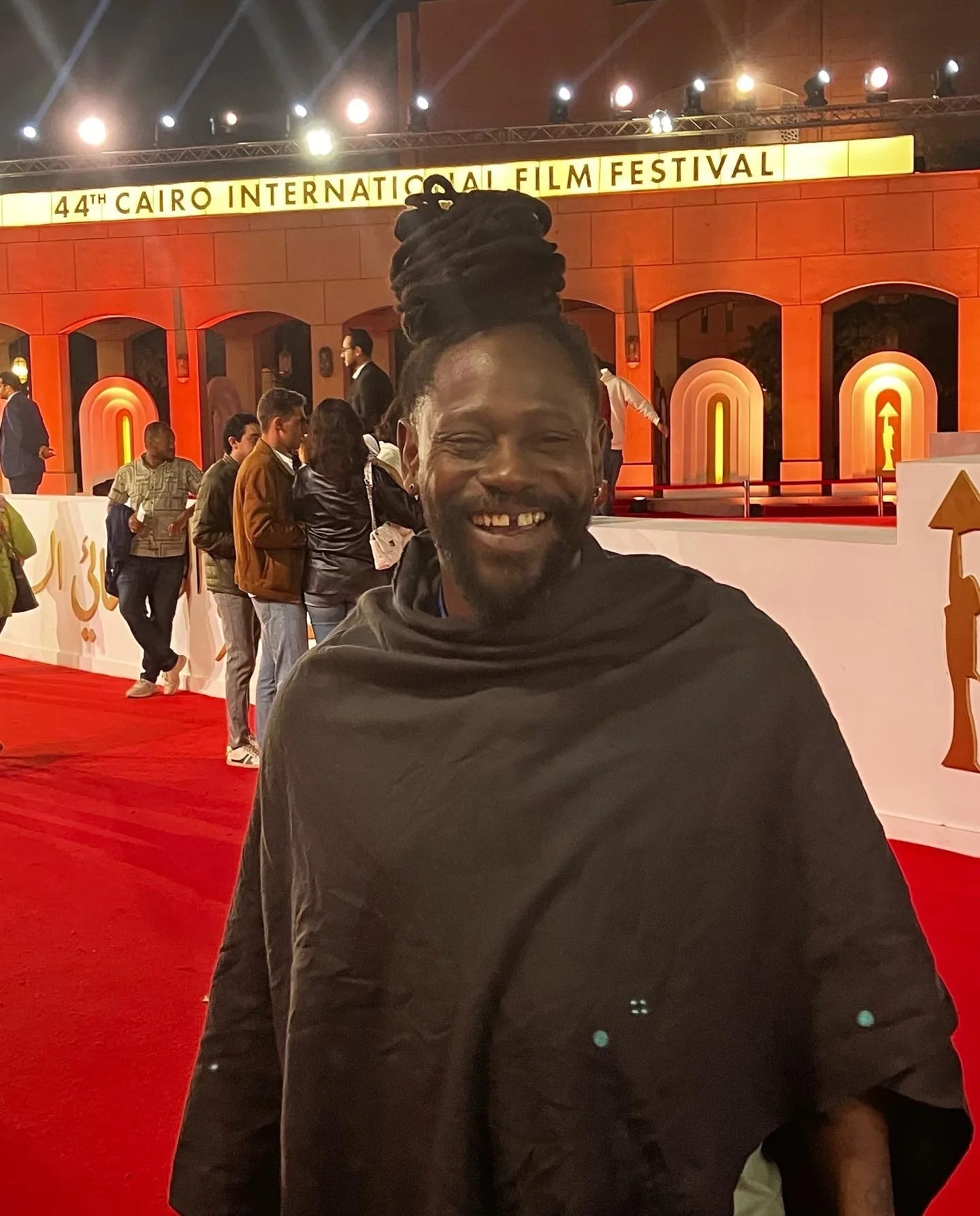
We are honoured to feature The Silent Matriarchy by Neigeme Glasgow - Maeda as our first guest blog of 2026.
Neigeme is a Trinidadian producer, mentor, and author with over 20 years of experience creating award-winning films and writing that amplifies marginalised voices. He is the founder of NGM Productions, where his work bridges heritage, cultural memory, and artistic sovereignty.
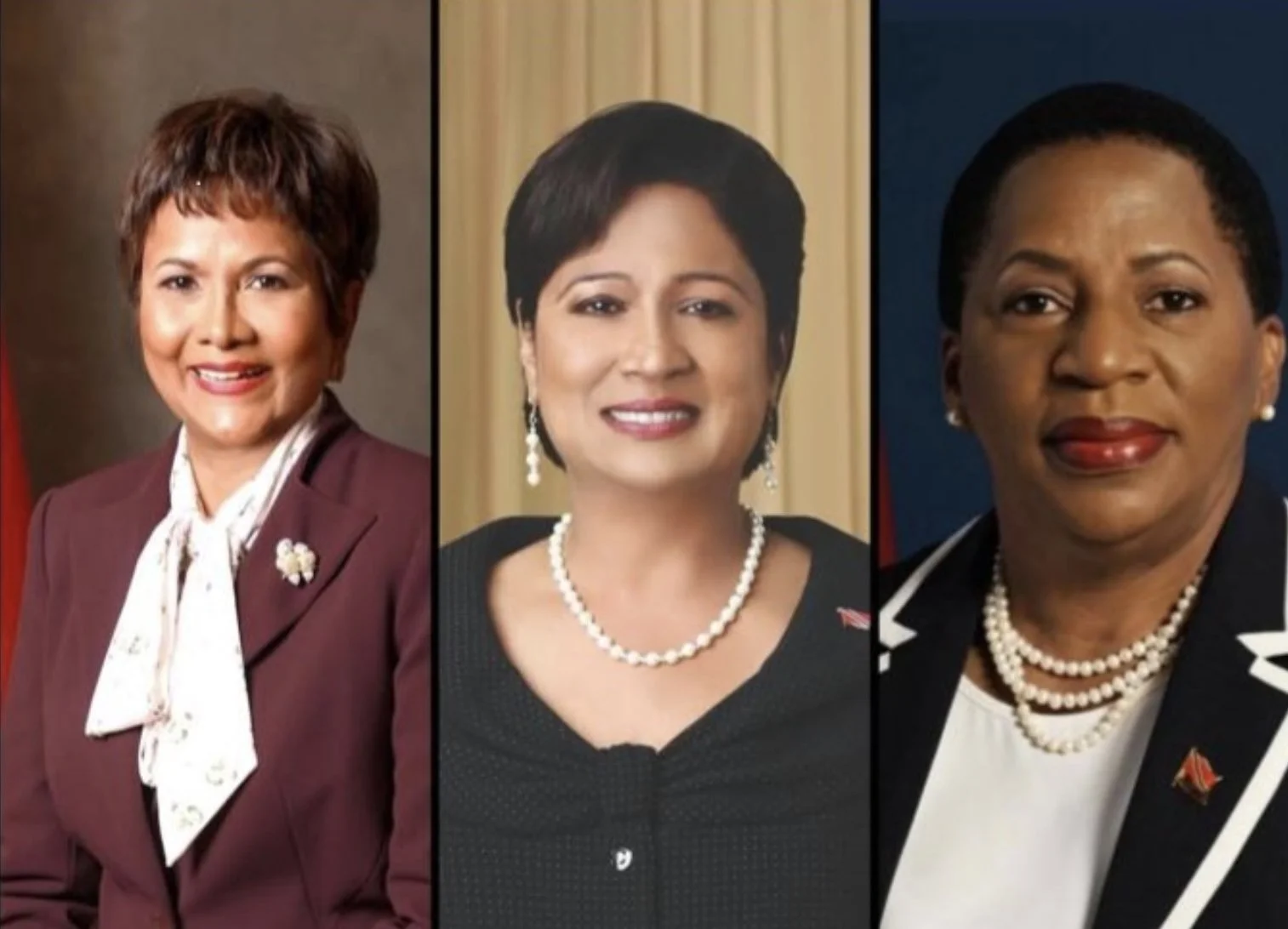
In this article, Neigeme examines a remarkable political moment in Trinidad and Tobago, where the President, Prime Minister, and Leader of the Opposition are all women. He explores the paradox of this achievement: women occupying the highest symbolic positions of power in a postcolonial state, yet operating within structures shaped by colonial and patriarchal legacies. The piece traces the historical inheritance of Caribbean women’s leadership, from early social activists and cultural icons to contemporary figures, and considers what it truly means to exercise feminist power in a constrained system.
Originally published on Neigeme’s Substack, he has generously shared the piece with Island Girls Rock so our community can engage with his reflections. At the end of the article, we have included a link to his Substack, and we encourage readers to explore his other work and subscribe to stay connected to his writing and projects.
The Unthinkable Achievement and Its Echoing Silence.
I am from a place that has achieved the unthinkable. In my twin-island nation of Trinidad and Tobago, the President, the Prime Minister, and the Leader of the Opposition are all women. This is not speculative fiction; it is our present-day reality. By the metrics of liberal Western feminism, we should be celebrating a historic victory. The glass ceiling hasn’t just been cracked; it has been utterly shattered. So why does it feel like we are standing in a room full of broken glass, in silence?
The world’s disregard for this milestone is telling, but our own ambivalence is the real provocation. The central, haunting question of this article, The Silent Matriarchy, is this: What does it mean when women achieve ultimate symbolic political power in a post-colonial state, yet that power feels both silent and insufficient in the face of entrenched geopolitical and social crises? To understand this paradox, we must move beyond the simplistic arithmetic of representation and confront a more uncomfortable truth: the acquisition of power within a system built on colonial and patriarchal foundations is not liberation. It is, as Caribbean critical thought teaches us, a more complex and haunting inheritance.
2 Deconstructing the Body Politic: Beyond Visibility
Western feminism has long been preoccupied with the body in power—specifically, getting a woman’s body into the highest office. This is a politics of visibility. But as Black feminist scholars have long argued, visibility without transformative power is a trap. We have placed women’s bodies in the master’s house, but the structure—the neocolonial state, the extractive economy, the racialised political machinery—remains intact.
This is where the silence comes from. The triumph feels hollow because the power being exercised is constrained by a system not of their making. President Christine Kangaloo, Prime Minister Kamla Persad-Bissessar, and Opposition Leader Pennelope Beckles- Robinson are not operating in a vacuum. They are navigating a political landscape forged in the fires of colonialism and sharpened by the ongoing geopolitical games of great powers. Their leadership is a test of whether a woman can captain a ship that is still structurally destined for the same colonial ports.
3 The Historical Inheritance: Plantation Legacies and Postcolonial Crises.
To understand the present, we must listen to the ghosts in our machine. The contemporary Caribbean state was born from what anthropologist Timothy Schwartz identifies as the historical emergence of a distinct regional family structure that developed in response to the political economy of “Plantation America” . Our political institutions were not born of organic, popular revolution but were often inherited at independence, fully formed as instruments of control, mirroring the very plantation power structures they purported to replace.The roadmap to our present paradox is paved with these inherited crises, what Schwartz might characterise as logical adaptations to “material challenges” of survival, rather than the “dysfunctional” patterns described by earlier scholars :
• The 1970 Black Power Revolution was a direct challenge to this “Afro-Saxon”imitation of Westminster politics
• The 1990 attempted coup exposed the fragility of the state and the deep-seated grievances it continued to foster
• The persistent racialised politics between the PNM and UNC parties exemplifies post-colonial “divide and rule” legacy.
The women now in power did not create these crises; they inherited them. Their rise is not a clean break from this history but a new chapter within it—a chapter still constrained by what Caribbean feminist scholar Rhoda Reddock describes as the need to deconstruct “the categories of ‘race’, ‘ethnicity’ and ‘nation’ and exposing their gendered character” .
The Voices That Carved the Path.
Now let me stop for a minuit. And track back for a second to explain what I meant when I said that “President Christine Kangaloo, Prime Minister Kamla Persad-Bissessar, and Opposition Leader Pennelope Beckles-Robinson are not operating in a vacuum.” You see to understand how we got here, or rather how they got there, you have to know the names of the women who carved the path, whose stories are the bedrock our present stands on.
Louisa Calderón, in the early 1800s, was a mixed-race woman who had the audacity to challenge the brutal torture inflicted by the British Governor, Thomas Picton. Her testimony was so powerful, so undeniable, that it forced his criminal trial in London. She was one of our first to expose the rotten core of colonial power, a symbol that even the most marginalised could shake an empire.
Then there was Audrey Jeffers, a pioneer of social work in Trinidad. In 1920, she founded the Coterie of Social Workers, one of the first organisations dedicated to addressing the needs of women and children in Trinidad. Understanding that charity wasn’t enough, she fought for and became the first woman elected to the Port of Spain City Council, using the tools of the state to continue her work. She moved our care from the sidelines to mainstream into the center of public life.
And we cannot tell this story without Claudia Jones. Born in Trinidad, she was a radical Black communist feminist who was deported from the US for her activism. She landed in London, where British intelligence reportedly saw her as a female “Malcolm X.” Undeterred, she founded the West Indian Gazette, the first major Black British newspaper, and it was she who, in response to racial violence, created the Caribbean Carnival in London, the precursor to the famous Notting Hill Carnival (Boyce Davies 112). For Claudia, liberation was inextricably linked to the fight against capitalism, imperialism, and racism. She taught us that our culture itself is a weapon for liberation.
In a similar vein of internationalism, but on a different axis of the Cold War, was the remarkable Dai Ailian. Born in 1916 in Couva, Trinidad, to a Chinese family, she found her stage not in the calypso tent, but in the dance academies and revolutionary cultural circles of the People’s Republic of China. A classically trained ballerina who studied in London, she became a pivotal cultural ambassador, embracing the new society and rising to prominence as a woman forging a path in a foreign land. She is revered as the “mother of Chinese modern dance,” the founding director of the Beijing Dance Academy, and a choreographer whose works like “The Lotus” became national classics. Her name, a celebrated one in China for decades, remains curiously absent from mainstream Western and even Caribbean historical narratives. Yet, one could argue that her legacy of cultural diplomacy, built on shared anti-colonial and socialist sympathies, was an early, powerful architect for the favorable China-Trinidad diplomatic relationships that persist to this day, demonstrating a unique form of soft power wielded by a Caribbean woman on the global stage.
And in our own time, we remember Gene Miles, a civil servant in the 1960s. She was a whistleblower who testified about high-level corruption in what became known as the “Gas Station Racket.” For speaking truth to power, she faced brutal retaliation, and many believe the stress led to her early death. She became a national symbol of the cost of integrity, a reminder that the fight for a just government often requires immense personal sacrifice.
But our story isn’t only told in courtrooms and council chambers; it is sung in our calypso tents. Long before the political triumph, our women were declaring their power through melody and verse. Then came Calypso Rose. She stormed the male-dominated fortress of calypso and, in 1978, didn’t just compete—she conquered, becoming the first woman to win the Calypso Monarch title. Her victory was a cultural earthquake, proving a woman’s voice could be the most powerful in the land. She paved the way for an artist like Deniese Plummer, whose massive hit “Woman is Boss” became more than a song; it was a national anthem for the everyday Trinbagonian woman. It celebrated her strength, her authority in the home and community, and proudly personified the Caribbean female perception of strength and capability. It was a pop-culture confirmation of what we already knew: woman is boss.
This legacy of fierce advocacy extends into the highest legal arenas. After the traumatic 1990 attempted coup, it was Pamela Elder, a formidable lawyer and former judge, who stepped forward to defend the 113 men of the Jamaat al Muslimeen including their charismatic leader Yasin Abu Bakr. In a nation still reeling from insurrection, her commitment to the principle of a fair trial—ensuring even the most unpopular defendants received due process—was a profound testament to the rule of law. Her successful defence, which resulted in an amnesty deal, was not about endorsing the action but about upholding the foundational principle of justice for all, even when it was politically unpopular. She demonstrated that a woman’s strength could lie in defending the very structures that hold a fragile democracy together.
These women—the enslaved, the social worker, the radical, the international ambassador, the whistleblower, the cultural icons, and the legal defender—and the countless “market women” who sustained our economies, were the architects. They worked in different arenas, but they were all building the same house: one where Caribbean women could finally, fully, take their seat at the head of the table.
4 Caribbean Feminist Political Thought: From Claudia Jones to Andaiye
This brings me to the crucial intervention of Claudia Jones, the Trinidad-born radical feminist and intellectual whose work exemplifies what Professor Carole Boyce Davies identifies as “the necessary call to change the conditions we inherited as Caribbean people displaced by transatlantic enslavement and indentureship” . Jones argued that the liberation of Black women was inextricably linked to the fight against capitalism, imperialism, and racism. For Jones, true power was not about individual achievement within an oppressive system, but about the collective struggle to transform that system itself.
This tradition extends to contemporary Caribbean left feminists like Andaiye, who insisted that “While we need organising that is anti-capitalist and anti-imperialist, our organising must also be anti-racist, anti-sexist, anti-homophobic, anti-transphobic and against all forms of exploitation, subordination and discrimination” . From this vantage point, our “Silent Matriarchy” is a paradox precisely because it represents an individual achievement within a structure that continues to perpetuate collective suffering. The government’s pivot towards US interests, threatening the regional “Zone of Peace,” and the handling of the “Dragon Deal” are not feminist acts simply because women are executing them. They are acts of realpolitik that may very well deepen the neocolonial subjugation of the Caribbean.
5 The Mottley Contrast: Two Models of Caribbean Feminist Leadership
The contrast between Prime Minister Persad-Bissessar’s alignment with US interests and Barbados Prime Minister Mia Mottley’s bold advocacy for climate justice and reparatory finance exemplifies the distinction between symbolic and substantive feminist power. Mottley’s emergence as a global voice represents what Jones and Andaiye might recognise as feminist leadership in the Caribbean tradition—one that confronts and challenges imperial power structures rather than accommodating them.
This divergence between two contemporary Caribbean female leaders illustrates that the gender of a leader is secondary to their political project; the ultimate measure of feminist power is the degree to which it advances liberation from intersecting systems of oppression. When the nation buckles under a refugee crisis, rampant crime, and economic precarity—conditions reflecting what UN Women Caribbean describes as the “remarkable resilience” required of Caribbean women throughout history—the gender of the leaders becomes a secondary concern to the material realities of the people .
6 Who Leads Whom? A Final Reckoning
The ultimate irony is indeed stark: Trinidad achieved this quiet revolution the year after Kamala Harris failed to become President of the United States. This fact forces a decolonial question upon global feminism: who should be leading whom?
The West, with its well-funded NGOs and corporate “girlboss” feminism, may well have much to learn from the Caribbean. It must learn that representation is not the endgame. It must learn from our history of powerful women, from the market women who sustained what Schwartz identifies as the crucial “household and regional subsistence economy” , to the radicalism of Claudia Jones and the contemporary activism of Caribbean feminist movements. It must learn that true power is not about occupying a seat at a table built on exploitation, but about building a new table altogether.
The silence surrounding our all-female leadership is not an absence of sound. It is the sound of a paradigm hitting its limit. It is the quiet before the storm of a new, more demanding question: what kind of power do we truly want? The power to rule a house divided, or the power, finally, to rebuild it?
Key References & Examples
Key Examples:
• The Trinidadian Triad: The simultaneous rise of President Christine Kangaloo,
Prime Minister Kamla Persad-Bissessar, and Opposition Leader Pennelope
Beckles-Robinson
• Geopolitical Alignment: The Trinidadian government’s pivot to US interests,
tensions with Venezuela, and the “Dragon Deal” as a point of geopolitical contention
• Internal Crisis: The social fabric strained by an influx of Venezuelan refugees and
a surge in violent crime
• The Mia Mottley Contrast: The Prime Minister of Barbados as a model of
Caribbean feminist leadership that challenges imperial power structures
Key References:
• Boyce Davies, Carole. “That Unmistakable ‘Red Thread’ in Caribbean Left Feminist
Activism.” SX, Africana Studies and Research Center, Cornell University,
2023, africana.cornell.edu/news/unmistakable-red-thread-caribbean-left-feminist-
activism/ .
• “Caribbean Feminisms: A Reading List.” Black Women Radicals,
2021, www.blackwomenradicals.com/blog-feed/caribbean-feminisms-a-reading-list .
• Schwartz, Timothy. “Explaining Caribbean Family Patterns.” Timothy Schwartz Haiti,
19 Dec. 2016, timothyschwartzhaiti.com/caribbean-family-patterns/ .
• UN Women Caribbean. “The story of Caribbean women is one of remarkable
resilience.” Facebook, 25 May 2024, www.facebook.com/unwomencaribbean/posts/
1216076710565600/
• Boyce Davies, Carole. Left of Karl Marx: The Political Life of Black Communist
Claudia Jones. Duke University Press, 2008.
• Guilbault, Jocelyne. “Calypso, Gender, and the Black Atlantic.” The Routledge
Diaspora Studies Reader, 2018, pp. 45-62.
• Look Lai, Wally. “Dai Ailein: Trinidadian Star in Mao’s China.” Caribbean Beat, Issue
145, May/June 2017.
More of Neigeme’s work can be found here